
The match you actually see
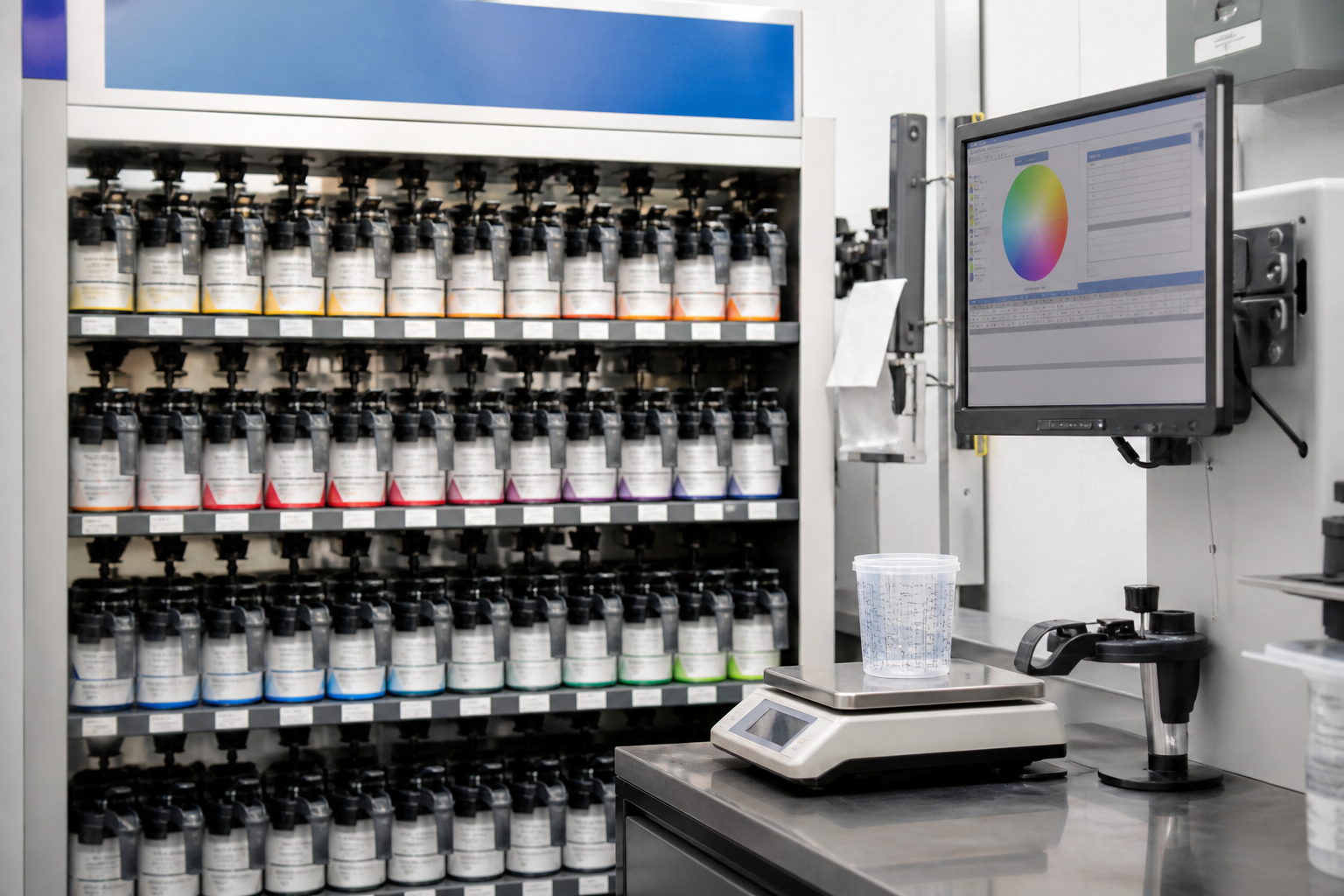
Metallics, pearls, and three-stage colors shift with the light — and with age. We read the panel with a spectrophotometer, then mix so a new fender does not flash a different shade next to the door.
Paint & materials
We stock four professional collision lines — DeBeer, PPG, Matrix, and KCC — and mix color on-site. That includes factory paint, faded panels, and cars that have already been refinished. The right system is the difference between a panel that disappears and one you notice every time you walk up to the car.
Why it matters
A factory finish is a stack of products that were designed to work together: filler, primer, sealer, base, and clear. Swap in the wrong layer — or a hardware-store substitute — and the repair can look fine on pickup day and fail in a Long Beach summer.
Metallics, pearls, and three-stage colors shift with the light — and with age. We read the panel with a spectrophotometer, then mix so a new fender does not flash a different shade next to the door.
Clear coat is UV armor. Cheap or mismatched clear clouds, chalks, or yellows. Coastal sun and salt air are hard on a finish; collision clears from these lines are built for that, not for a weekend project.
Primer, base, and clear have to be compatible. We keep full systems on the wall so the undercoat, the color, and the gloss belong to the same family — which is how a repair stays smooth and stays put.
Color matching & warranty
Many shops will only spray to the original OEM formula, and will not stand behind the job if the paint is faded, aftermarket, or a previous respray. That is not how we work.
Previous bodywork, aftermarket colors, and secondary refinishes are welcome here. If the car no longer wears its factory paint, we still take the job — and we mix to what is actually on the vehicle, not to a code that no longer matches.
A spectrophotometer reads the color on the panel itself, including fade from sun and age. We use that reading to catch the true shade, tint the mix, and blend so neighboring panels match — even when the original formula would look too new, too dark, or simply wrong.
We warrant our refinish work on vehicles that are not brand new. Age, fade, or a prior paint job is not a reason for us to walk away from the repair. What we spray, we stand behind; the terms are confirmed in writing with your estimate.
The four lines
We do not force every job through one brand. We pick the system that matches the vehicle, the color, and the kind of repair — always from stock we mix here.
Europe
Our European line, mixed on the same bank as the rest. DeBeer is a Dutch refinish system known for color precision — especially metallics and pearls, where flake and depth have to sit just so.
Waterborne systems from this family are built for a clean, high-clarity match and durable clears. When a blend has to disappear on a difficult color, DeBeer is often the line we reach for.
United States
PPG is the American collision standard: enormous color libraries, formulas that speak the same language as most late-model OEM finishes, and waterborne systems shops across the country already know how to document for insurance work.
Coverage, blendability, and a deep toner set make it a workhorse for everyday claims and for colors that live in PPG’s retrieval system. If the car was painted in a PPG world from the factory floor, we can usually stay in that world.
Independent collision
Matrix is a full professional system aimed at independent body shops: primers, sealers, basecoats, clears, and the additives that belong with them — not a single “hero” can sitting next to unmatched products.
It is the practical line for a lot of real collision work: solid coverage, a complete undercoat-to-clear stack, and quality that does not depend on a household brand name. When the job needs a coherent system at collision-shop spec, Matrix is on the wall for a reason.
Korea
KCC is a major coatings manufacturer — the kind of chemistry that also shows up in OEM and industrial finishes — with a growing collision-refinish presence. Korean and many Asian platforms, in particular, often sit comfortably in this family.
We stock KCC so those cars get a professional system instead of a forced match from a line that was never mixed for them. Same rule as the others: color, clear, and undercoats chosen to work together.
We choose the system that fits the vehicle and the repair. Always a professional collision product from stock we keep here — never a hardware-store substitute.
Basecoat
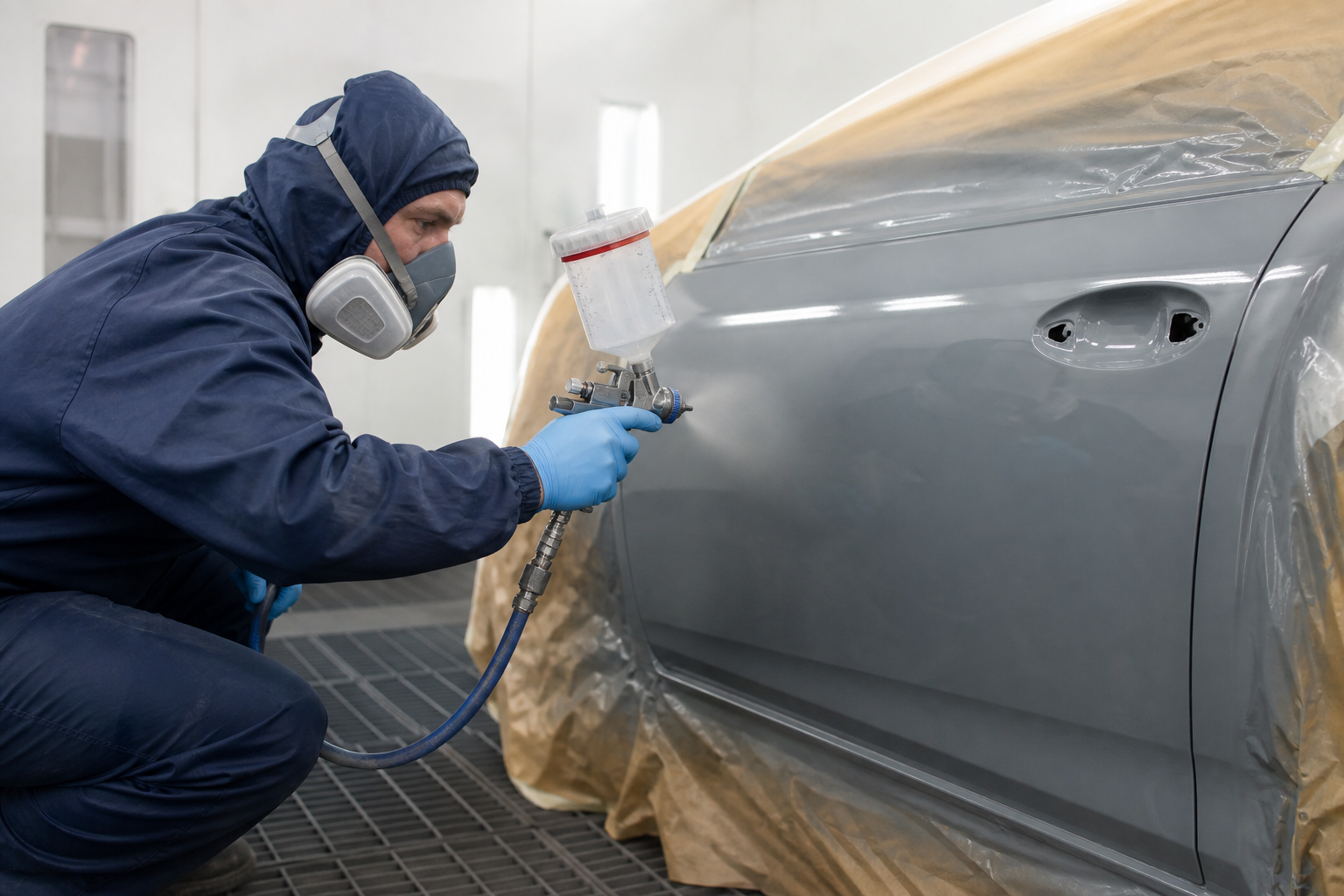
Factory paint fades. Secondary and non-factory finishes rarely match the book. Metallics lay down differently on a vertical door than on a flat hood. A pre-mixed can cannot see the car in front of us.
We read the panel with a spectrophotometer, pull or build a formula, tint, and check a spray-out under our lights before it goes in the booth — DeBeer, PPG, Matrix, or KCC, whichever will actually match that panel and the ones beside it.
Clear coat
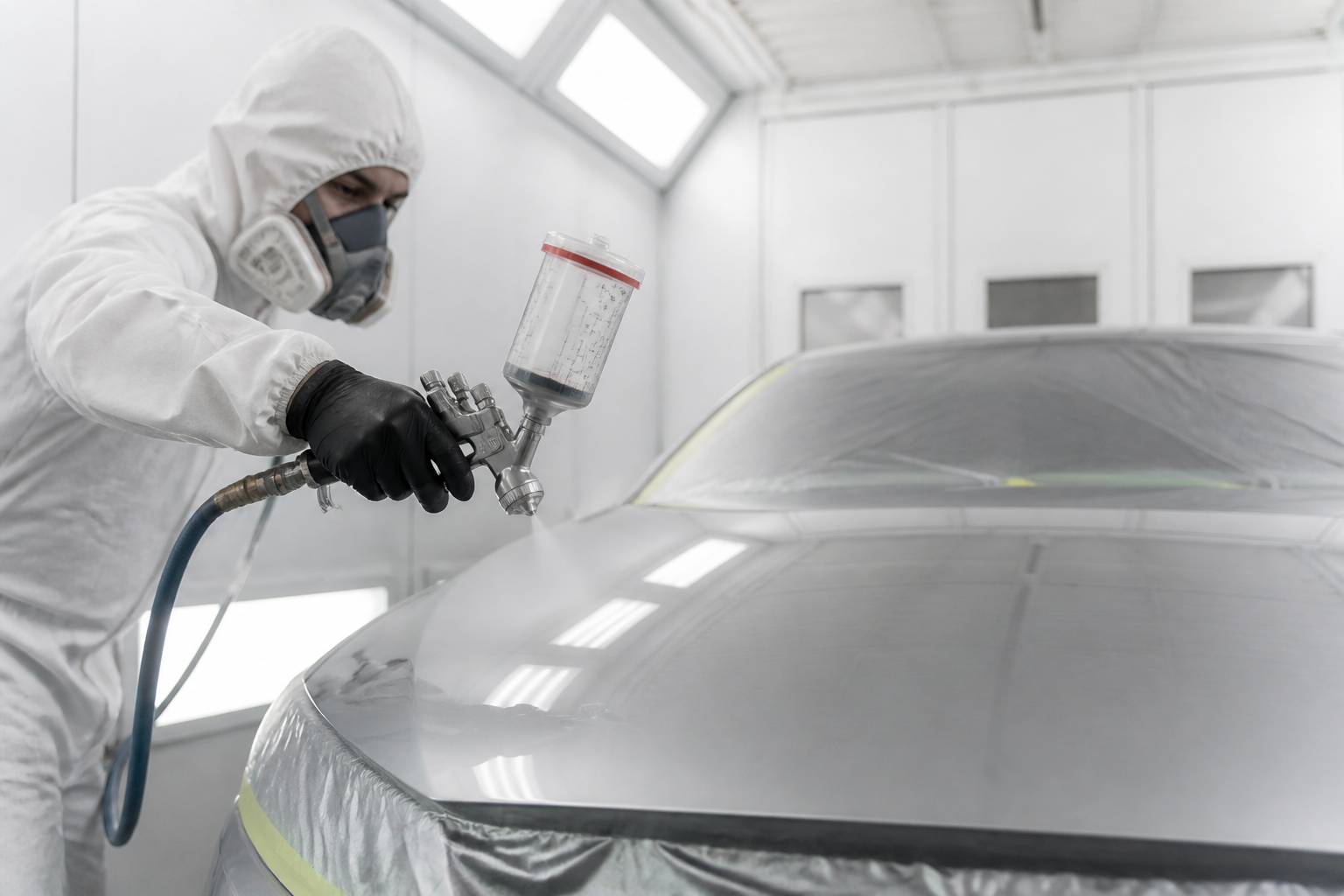
Clear is the layer that makes a repair look finished and the one that takes the sun. We spray professional clears from the same families we stock for color, not a generic topcoat from a different chemistry.
Pairing base and clear from one system is how a panel keeps its depth instead of looking cloudy, dull, or slightly “off” six months later.
Under the paint
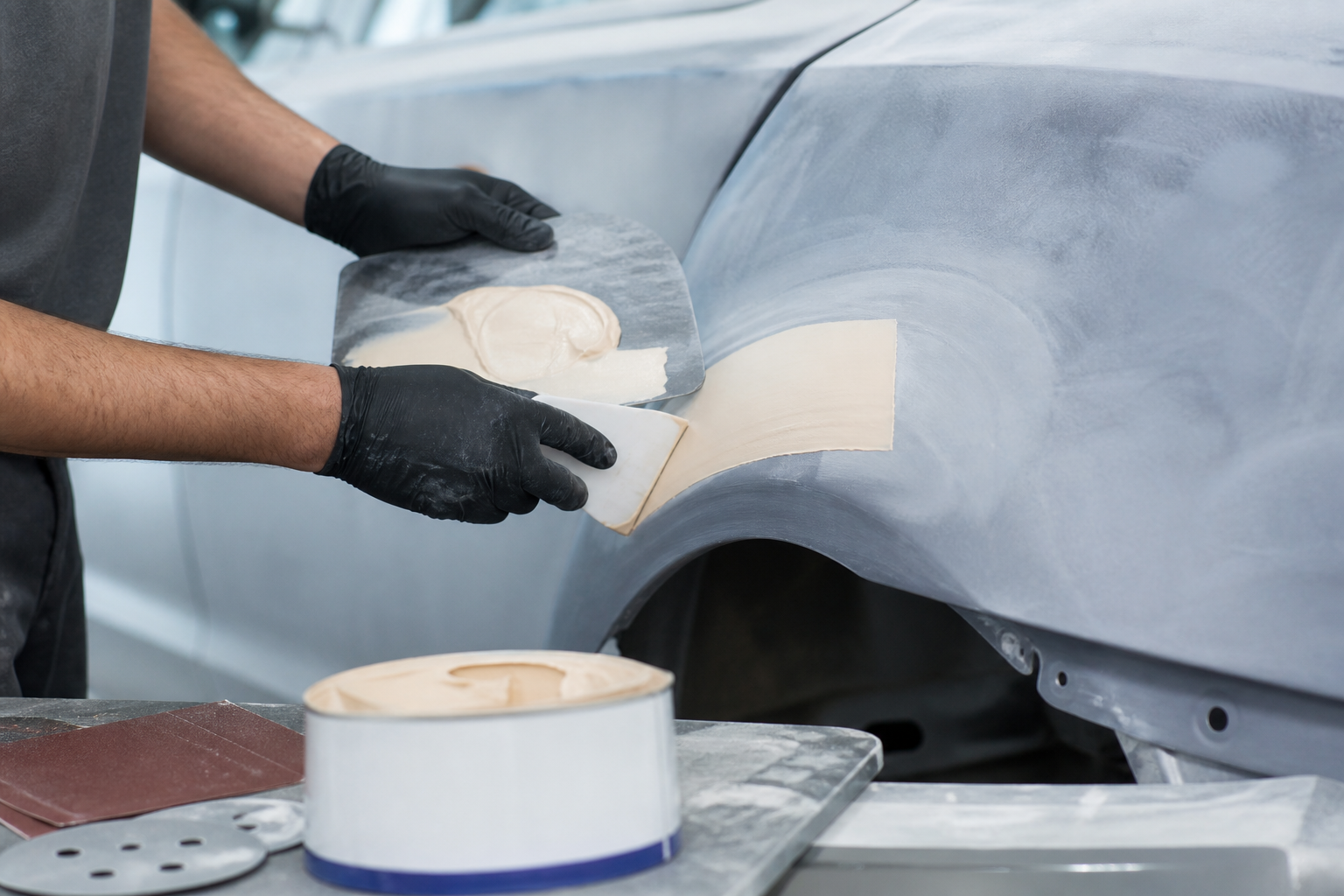
Fillers, polyester putties, epoxy and urethane primers, sealers, adhesives, and corrosion protection are part of the same list. If it goes on the car, it is a body-shop product meant to live under DeBeer, PPG, Matrix, or KCC — not a shortcut.
That stack is why a repaired quarter panel stays smooth, sticks, and does not telegraph six months down the road.